For homeowners in Lake Worth, FL, air conditioning is not a seasonal convenience but a year-round necessity. The combination of heat and humidity that defines this part of Palm Beach County puts consistent demand on HVAC systems, and when those systems are compromised by dirty ductwork, the effects ripple across comfort, air quality, and monthly operating costs. From the historic neighborhoods near Lake Osborne to the communities along Hypoluxo Road, homes throughout the area share this common vulnerability.
Air ducts are the circulatory system of any central HVAC setup. When they are clean and unobstructed, conditioned air moves freely from the equipment to every room in the home. When they accumulate dust, debris, and biological contaminants, that movement is restricted, and the consequences affect nearly every dimension of system performance.
Professional duct cleaning addresses these issues at the source, restoring airflow, improving indoor air quality, and reducing the strain that dirty ducts place on the entire system. Understanding the specific ways contaminated ductwork degrades AC performance helps homeowners recognize when service is needed and why it matters.
Signs You Need Professional Duct Cleaning Services
Ductwork operates out of sight, which means the signs of a problem are often noticed in other parts of the home before the ducts themselves are considered. Knowing what to look for allows homeowners to act before minor buildup becomes a significant performance issue.
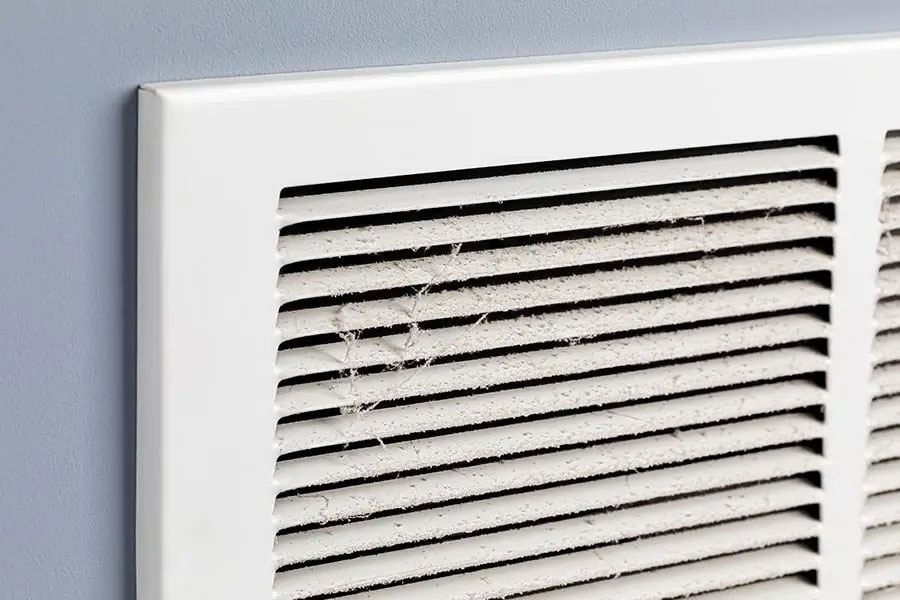
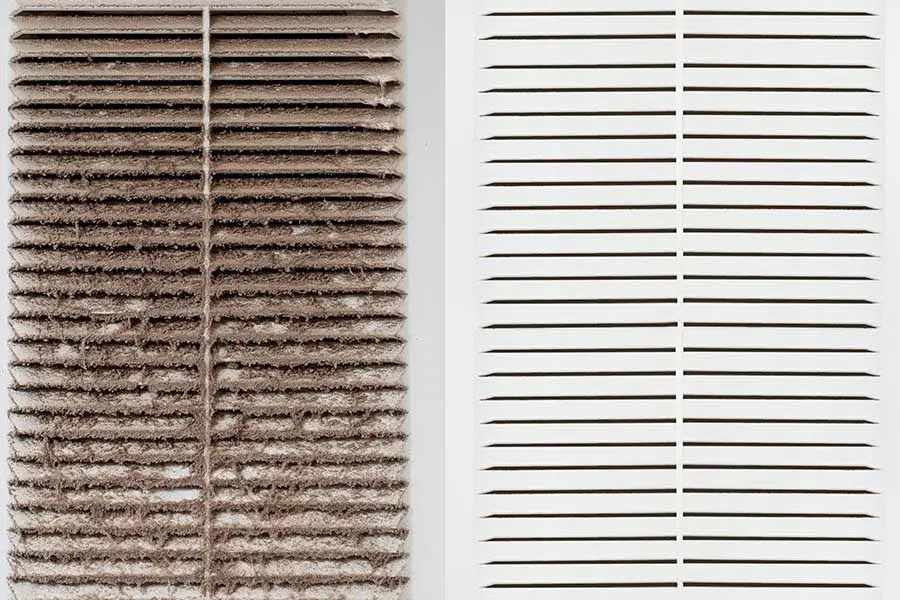
Dust accumulating around supply vents is one of the most visible indicators. When particles are visible around vent covers or on nearby surfaces shortly after cleaning, it suggests the duct system is actively distributing contaminated air throughout the home. Musty or stale odors that appear when the AC runs point to biological growth inside the ductwork, often mold or mildew thriving in the combination of dust and residual moisture.
Increased allergy or respiratory symptoms among household members, particularly when spending time indoors, frequently correlate with deteriorating duct conditions. Unusual sounds from the HVAC system, unexplained energy bill increases, and uneven cooling across different rooms are additional signals that the duct system deserves professional attention.
In our service calls throughout Lake Worth, early intervention consistently produces better outcomes than waiting until symptoms become severe. A professional inspection can determine whether cleaning alone is sufficient or whether ductwork repair or replacement is also warranted.
How Dirty Air Ducts Block Efficient Airflow
The relationship between duct cleanliness and airflow efficiency is direct and measurable. As dust, debris, and other particulates accumulate along the interior walls of duct passages, the effective cross-sectional area through which air can move is reduced. The AC system must generate greater pressure to push the same volume of air through a more restricted pathway, which translates into higher energy consumption and reduced delivery at the vents.
Working in homes across Lake Worth, we regularly find that airflow restrictions from dirty ducts cause the system to run longer cycles to achieve the same level of cooling, compounding both energy costs and equipment wear. Rooms at the end of longer duct runs are often the first to show the effects, as the pressure drop across a restricted system leaves the farthest supply registers with inadequate flow.
Uneven cooling is one of the most noticeable homeowner complaints associated with dirty ducts. When some rooms receive substantially less conditioned air than others, occupants adjust thermostat settings downward to compensate, which increases system runtime further and accelerates the cycle of inefficiency.
Why Contaminated Ducts Lead to Higher Energy Bills
The financial impact of dirty ductwork accumulates quietly over time, which is part of why it is so easy to overlook until the problem has become significant. The mechanism is straightforward: when airflow resistance increases, the blower motor works harder and runs longer to meet the thermostat demand, consuming more electricity in the process.
Increased Airflow Resistance
Particulate buildup inside ducts does not need to reach a severe level to begin affecting efficiency. Even moderate accumulation along duct walls and at registers creates resistance that the system must overcome with every operating cycle. Over a cooling season, the additional energy consumed by a system fighting this resistance adds meaningfully to utility costs.
Based on what we see in Lake Worth, FL properties, homes that have not had duct cleaning performed in several years often show measurable airflow deficits at supply registers compared to what the system is designed to deliver. Restoring those flow rates through professional cleaning reduces operating energy consumption and brings monthly bills back toward expected levels.
Inefficient System Operation
Beyond the direct energy cost, a system operating under sustained airflow restriction experiences accelerated wear on mechanical components. The blower motor, in particular, is subject to greater stress when it must work harder than designed to maintain circulation. Over time, this contributes to earlier component failures and more frequent repair needs.
Pairing duct cleaning with a professional AC maintenance visit addresses both the duct system and the mechanical components simultaneously, ensuring the entire system is operating within its designed parameters after service is complete.
How Dust and Allergens Affect Your AC Performance
Particulate contamination inside ductwork creates two distinct but related problems. The first is the mechanical airflow restriction described above. The second is the continuous introduction of dust, allergens, and other particles into the conditioned air that circulates through the home.
Pollen, pet dander, skin cells, and other biological material accumulate in duct systems over time. When the AC runs, these particles are disturbed and carried into the living space along with the conditioned air. For household members with allergies, asthma, or other respiratory sensitivities, this ongoing exposure can produce or worsen symptoms that are otherwise difficult to explain.
Uneven cooling compounds this problem. When some areas of the home receive less conditioned air due to restricted ducts, those spaces may also receive less filtered air, allowing particulate concentrations to build up in certain rooms. Regular professional cleaning removes the accumulated material that standard filter replacement cannot address, reducing the ongoing allergen load that the AC system distributes throughout the home.
How Moldy Ducts Impact Your Home’s Air Quality
Mold growth inside ductwork represents the most serious air quality concern associated with contaminated ducts. Ducts provide conditions that support mold development: darkness, limited airflow in dirty systems, and residual moisture from normal cooling operation. Once established, mold colonies release spores continuously into the airstream that passes through the affected sections.
Mold spore exposure indoors is associated with a range of health effects, including allergic responses, respiratory irritation, sinus congestion, and in more serious cases, infections in immunocompromised individuals. A musty odor that appears when the AC operates is often the first indication that mold is present somewhere in the duct system, though visual confirmation typically requires a professional inspection.
Addressing mold in ductwork is not a task that responds to surface cleaning or air freshening. Professional duct cleaning with appropriate antimicrobial treatment is required to eliminate the growth and prevent recolonization. Identifying and correcting the moisture conditions that allowed the mold to develop in the first place is an equally important part of the remediation process.
How Clogged Filters Reduce AC Efficiency
Air filters are the first line of defense against particulate accumulation in the duct system, but they can only perform that function when they are replaced or cleaned on schedule. A filter that has reached its capacity becomes a restriction in its own right, reducing the airflow entering the system and forcing the blower to work harder to maintain circulation.
Beyond the energy efficiency impact, a severely clogged filter can allow the evaporator coil to drop below its normal operating temperature as airflow decreases. When this happens, moisture on the coil surface freezes rather than draining normally, and ice accumulation further restricts airflow and can cause system damage if the condition is allowed to continue.
Filter condition and replacement intervals should be part of every homeowner’s routine HVAC awareness. In Lake Worth, FL homes, where the system runs frequently and outdoor particulate levels can be elevated during certain seasons, more frequent filter checks are warranted. Filter maintenance is also a standard component of a professional maintenance visit, ensuring the right filter type and installation are confirmed during each service call.
How Duct Cleaning Extends Your AC’s Lifespan
The connection between duct cleanliness and equipment longevity is well established in HVAC practice. A system that operates within its designed airflow parameters experiences less mechanical stress, maintains more consistent operating temperatures, and requires fewer unplanned repairs over its service life.
Improved Airflow Efficiency
When duct passages are clear, the blower motor delivers air at designed pressures without overexertion. Supply registers receive proper flow, rooms reach setpoint temperatures within expected timeframes, and the compressor cycles normally rather than running extended periods to compensate for restricted delivery. All of these factors reduce cumulative wear on the system’s most critical components.
Reduced System Strain
Sustained operation under airflow restriction is one of the more significant contributors to premature HVAC failure. The compressor, blower motor, and control components all have service life ratings that assume operation within designed parameters. When a system routinely operates under elevated load due to dirty ducts, those ratings are effectively shortened. Regular duct cleaning is one of the most straightforward ways to protect that investment.
Enhanced Indoor Air Quality
Clean ducts allow the AC system to deliver conditioned air that has passed through properly functioning filtration without picking up additional contaminants from duct wall deposits. The result is a measurable improvement in the particulate and allergen content of the air circulating through the home. For families with young children, elderly members, or anyone with respiratory sensitivities, this improvement has practical health implications beyond simple comfort.
Keeping Lake Worth Homes Cool and Efficient
Dirty air ducts affect AC performance in ways that touch every aspect of the system, from energy consumption and equipment lifespan to indoor air quality and room-by-room comfort. The seven factors covered in this article, airflow restriction, energy inefficiency, dust and allergen circulation, mold contamination, filter strain, and cumulative equipment wear, are all addressable through professional duct cleaning performed on a consistent schedule.
For Lake Worth homeowners who have not had their duct system professionally serviced in several years, or who have noticed any of the warning signs described here, a professional inspection is the right next step. Contact our team today to schedule a duct cleaning assessment and find out what condition your system is in.